01
Everything starts with the data source.
Alarm panels, video, access control, perimeter sensors, fire and building systems. Any vendor, any site. We start by sourcing all of it.
Public sector
Hundreds of thousands of substations, well houses, transfer stations and pumping stations. When one fails, a district goes cold, a town goes dry, a region goes dark. We connect every alarm, every camera and every emergency call from your sites into one platform.
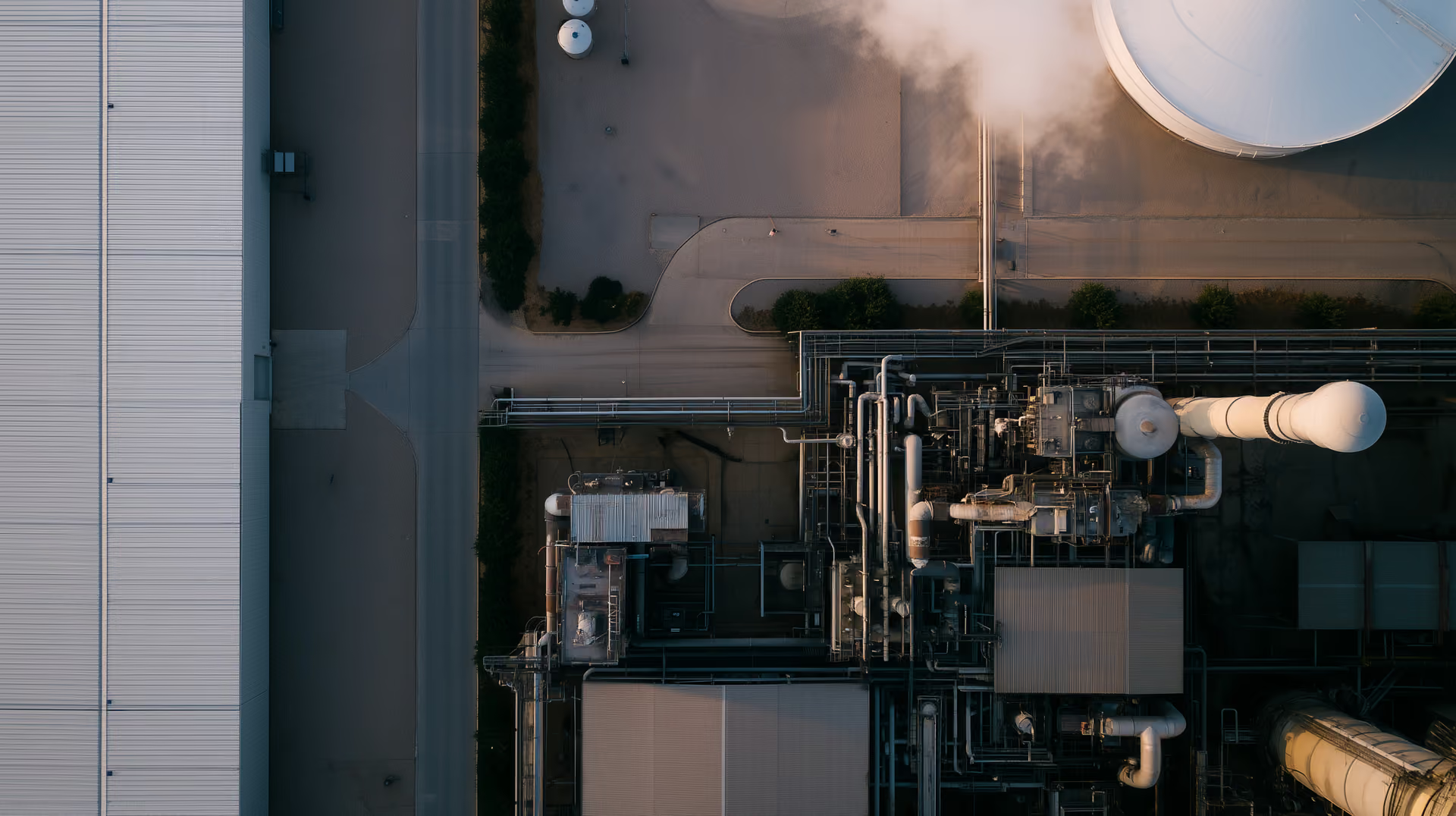
A substation feeds a water plant. The water plant supplies a hospital. The hospital runs on a data center drawing power from the same substation. A failure at one site rarely stays there.
Regulation has followed. The CER Directive obliges operators to assess their risks, protect their sites against physical threats and report significant incidents; Germany transposes it as the Umbrella Act for Critical Infrastructure Protection (KRITIS Dachgesetz).
Most of those obligations produce signals: access control, perimeter detection, video, intrusion, fire and building systems, across dozens of sites and as many vendors. We receive them, attach the context each one needs, and turn it into a decision a person makes.
The record a regulator asks for comes out of the same system.
01
Everything starts with the data source.
Alarm panels, video, access control, perimeter sensors, fire and building systems. Any vendor, any site. We start by sourcing all of it.
02
Context turns data into meaning.
Trident links every signal to its site: equipment, history, dependencies, live video. One alarm becomes a situation with context.
03
Meaning becomes a decision.
The measures agreed for that site, run in order. Decided in our center, on our own software. Around the clock.
04
Decisions become insights.
Every incident is documented end to end. Reports go to management and regulators. False alarm patterns improve the next decision.
Talk to us about your sites.
Book a conversation